HBO's Harry Potter Series Now Launching Sooner Than Expected
On April 5, 2026, HBO released Finding Harry: The Craft Behind the Magic on its streaming platform. Within days it became the most-watched movie on HBO Max worldwide. The series it promotes does not premiere until December 25. Eight months of runway. A 26-minute documentary. No narrative footage. And it dominated the platform's charts.
That sequence of events is not normal. It is not how television marketing works. And it tells us something important about both the demand surrounding HBO's Harry Potter series and the strategy the network is deploying to manage it.
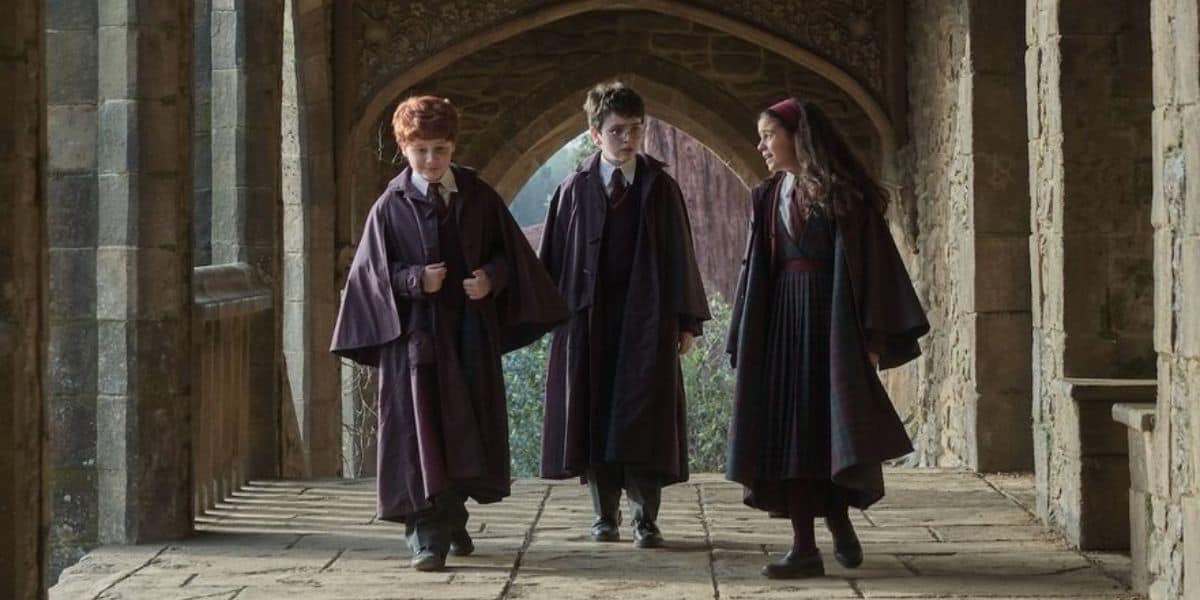
 HBO's accelerated marketing strategy for the Harry Potter series includes early release of behind-the-scenes content to build anticipation. Credit: insidethemagic.net
The Acceleration Timeline
The original expectation, based on industry norms and HBO's own history, was straightforward: trailer in early 2026, marketing ramp through the fall, premiere in December. That is how prestige television is sold. You build anticipation gradually, control the information flow, and peak at premiere.
HBO abandoned that playbook in March 2026 when it released the first trailer for Harry Potter and the Philosopher's Stone. The response -- 277 million organic views in 48 hours, the most-watched trailer in HBO's history -- apparently convinced the network to push forward faster.
The Finding Harry special was announced on April 2, three days before it aired. That timeline is notable. This was not a long-planned marketing event with weeks of promotional buildup. It was a rapid deployment -- a decision made, executed, and delivered to the platform in what appears to have been a compressed window. HBO saw the trailer numbers and moved.
The special itself premiered at 3:00 p.m. ET in the UK and 8:00 p.m. ET in the United States on April 5. It aired on linear HBO before landing on the streaming platform, an unusual choice for a documentary special that signals the network wanted simultaneous traditional and digital reach.
What Finding Harry Actually Does
Strip away the marketing language and Finding Harry serves a specific strategic function: it neutralizes skepticism.
Since the series was announced in April 2023, the Harry Potter television adaptation has faced a challenge no amount of casting announcements or set photos could fully address. The original films are not just remembered -- they are actively rewatched. They are seasonal traditions. They are the visual vocabulary an entire generation uses to picture Hogwarts, Diagon Alley, and the Hogwarts Express. Any new version exists in direct comparison to imagery that is seared into collective memory.
The standard approach to overcoming that comparison is to show the finished product and let it speak for itself. HBO chose a different path: show the process. Finding Harry takes viewers inside Warner Bros. Studios Leavesden and walks them through casting (over 40,000 auditions reviewed), set construction (practical builds of Diagon Alley, the Great Hall, and the Forbidden Forest), costume design (period-accurate 1991 wardrobes), and creature effects (handcrafted animatronics alongside digital work).
The implicit argument is: this is not a cash grab. This is a production staffed by people who care about the material and are building something at a scale the films could not achieve within their format. John Lithgow, speaking as Albus Dumbledore, articulated it directly in the special: "We get to enact all the things that you know are going on in the wings, but you don't see them."
That message needed to reach the audience before December. Not alongside the premiere, when first impressions are already forming and reviews are publishing. Before. HBO is investing eight months in resetting expectations so that when the first episode airs, viewers arrive with curiosity rather than defensiveness.
The Risk of Early Engagement
Accelerating the rollout carries real risk, and HBO's leadership is aware of it.
The primary danger is peaking too early. Television marketing operates on momentum curves. Release content too far ahead of premiere and you risk the audience's attention migrating elsewhere before the show arrives. Eight months is a long time to sustain interest, especially in a media environment where attention spans are compressed and the next headline is always 30 seconds away.
HBO is betting that Harry Potter is an exception to this rule. The franchise's cultural footprint is deep enough that engagement does not follow a standard decay curve. Fans who watched Finding Harry in April will not forget the series exists by December. The question is whether the network can maintain a cadence of content releases -- additional teasers, casting announcements, production updates -- that keeps the conversation alive without exhausting its material.
There is also the question of expectations management. Finding Harry shows an in-progress production. Sets are partially built. Costumes are being fitted. Creatures are in various stages of completion. Presenting unfinished work to an audience of millions is inherently risky because it invites judgment before the creative team has had the chance to deliver a finished product. A practical Flubberworm animatronic might look charming in a behind-the-scenes context and strange in a narrative scene. The gap between "here's how we're building it" and "here's the final result" is where disappointment can take root.
HBO head Casey Bloys has acknowledged that the series will not maintain an annual release schedule, with Season 2 (Chamber of Secrets) not expected before 2028. That admission introduces its own risk to the early-engagement strategy: if the audience is already deeply invested before Season 1 airs, a two-year gap before Season 2 could test that investment.
What This Means for December
The accelerated rollout reframes the December 25 premiere. It is no longer the moment the audience discovers the series. It is the moment an audience that has been watching, analyzing, and debating for eight months finally gets to see the finished product. That changes the dynamics of premiere night in ways that benefit HBO.
First-episode viewership will almost certainly be massive. The trailer and Finding Harry have already established a baseline of engagement that dwarfs most television launches. The real metric will be retention -- how many viewers return for episode two, episode three, and the season finale. That is where the quality of the actual series, rather than its marketing, takes over.
The choice to title the first season Harry Potter and the Philosopher's Stone rather than the Americanized "Sorcerer's Stone" fits the broader strategy. It signals fidelity to the source material, aligning the series with book readers who have long preferred the original title. It is a small detail that communicates a larger message: this production is not cutting corners or making concessions for the sake of mass-market accessibility.
Showrunner Francesca Gardiner and director Mark Mylod have kept relatively low public profiles throughout production, letting the work speak through controlled releases rather than interview circuits. That restraint, combined with the aggressive marketing calendar, creates an interesting tension: the production is quiet, but the platform is loud.
The Larger Bet
HBO is not just launching a television series in December 2026. It is attempting to relaunch a franchise. The Harry Potter series is designed to run for seven seasons across approximately a decade, adapting each book with the kind of depth and fidelity that two-hour films could never accommodate. If it works, it becomes the backbone of HBO's streaming platform for the foreseeable future.
The decision to start releasing content eight months early is a confidence play. HBO believes the production can withstand scrutiny at close range -- that showing the behind-the-scenes work will build support rather than undermine it. The streaming numbers suggest that bet is paying off.
Whether the series itself delivers on the promise of its marketing will not be known until Christmas night, when the first episode airs and millions of viewers see the cupboard under the stairs for the second time. Until then, HBO has made its position clear: this is not a franchise that needs to hide behind release-day reveals. It is one that gets stronger the more you see.
From Our Estate
Planning a trip to Universal Orlando?
Wizard's Way is a private luxury estate minutes from the parks. Nine bedrooms, private pool, designed for families who expect more.
Reserve Your Stay